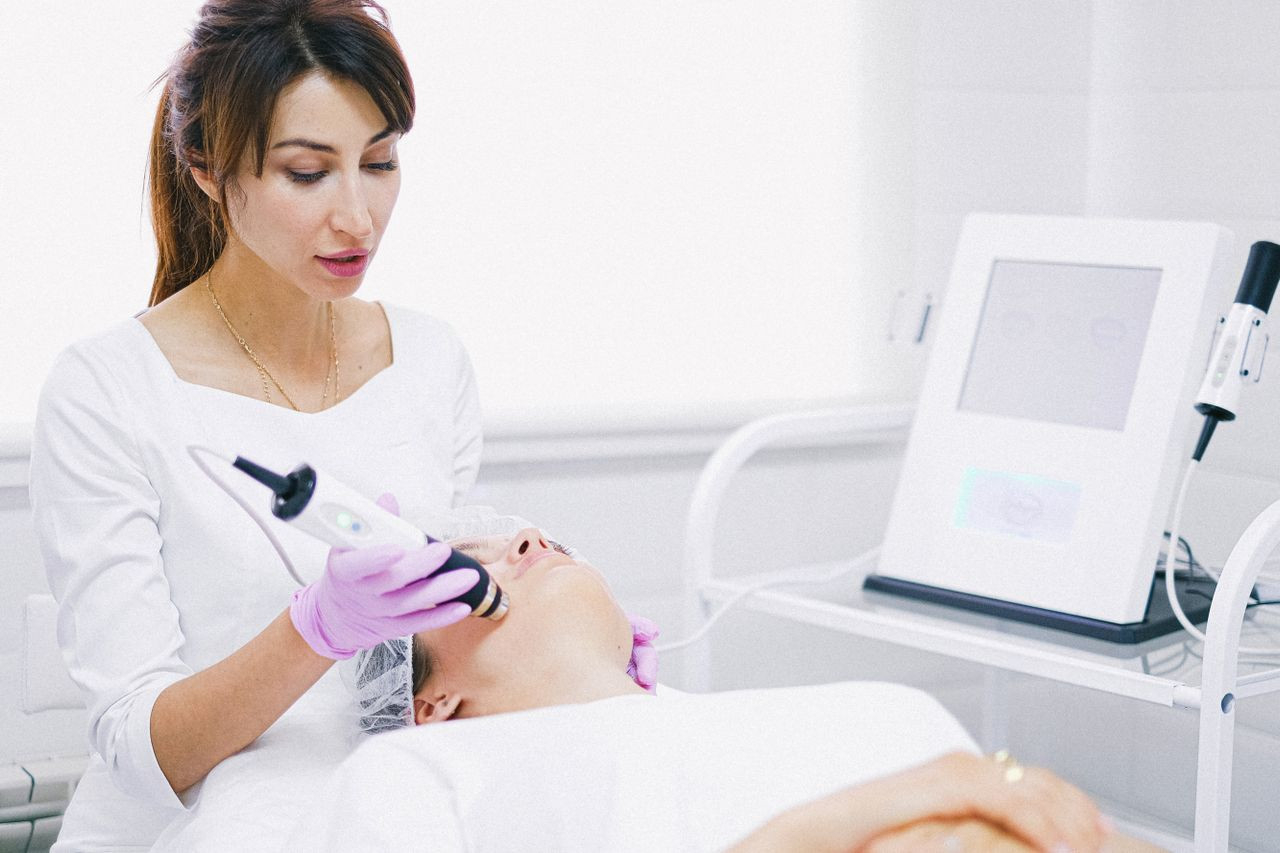
Diamond Microdermabrasion addresses this buildup through controlled mechanical exfoliation. At M Day Spa in Beverly Hills, the treatment uses professional diamond-tip technology to gently polish the skin’s surface and reveal a smoother, fresher-looking complexion underneath.
But how does Diamond Microdermabrasion work, and what can it realistically do for your skin? Here is the science behind the treatment.
What Is Diamond Microdermabrasion?
Diamond Microdermabrasion is a nonchemical, minimally invasive resurfacing treatment. A handheld device fitted with a textured diamond tip is moved across the skin in carefully controlled passes.
The tip loosens dull surface cells while gentle suction removes the exfoliated material. Unlike traditional crystal microdermabrasion, diamond-tip technology does not spray loose abrasive particles onto the face. This gives the esthetician more direct control over the areas being treated.
At M Day Spa, Diamond Microdermabrasion is offered as a 75-minute facial focused on surface renewal, smoother texture, and a brighter-looking complexion.
How Does It Smooth the Skin?
The visible surface of the skin is formed by the stratum corneum, the outermost part of the epidermis. It contains flattened cells that help protect the body from moisture loss and environmental exposure.
These cells are gradually shed through the skin’s natural renewal process. However, age, dryness, sun exposure, lifestyle, and inconsistent exfoliation can contribute to uneven surface buildup.
Microdermabrasion mechanically removes part of this dull outer layer. Research describes the procedure as a superficial resurfacing method that targets the stratum corneum rather than the deeper layers of the skin.
Once some of the uneven buildup is removed, the skin often feels softer to the touch. Areas of superficial roughness may look smoother, and makeup may apply more evenly because it is no longer catching as noticeably on dry, irregular patches.
Why Does the Skin Look More Polished?
Healthy-looking radiance is partly influenced by the way light interacts with the skin. A rough or flaky surface scatters light unevenly, which can make the complexion appear flat or tired.
By creating a more uniform surface, Diamond Microdermabrasion allows light to reflect more evenly. This helps explain the polished glow that many clients notice after treatment.
The procedure does not artificially brighten the skin or change its natural color. Instead, it removes some of the buildup that may be obscuring the skin’s natural luminosity. The result is a complexion that can look cleaner, fresher, and more refined.
How Does Diamond Microdermabrasion Support Skin Renewal?
Mechanical exfoliation encourages the skin to replace the removed surface cells as part of its normal renewal process. This does not mean that one facial generates entirely new skin or produces an immediate structural transformation.
The initial improvement is mainly a surface effect: fewer dull cells, smoother texture, and a more even appearance.
Changes beneath the surface are more gradual. In a clinical and histological study involving a series of eight microdermabrasion sessions, researchers observed mostly mild to moderate cosmetic improvement, along with changes in collagen density and organization. These findings suggest that repeated professional treatments may support longer-term renewal, but results are generally subtle and vary between individuals.
Diamond Microdermabrasion should therefore be viewed as a progressive skin-maintenance treatment rather than a substitute for medical resurfacing procedures.
Can It Reduce the Appearance of Pores?
No facial can permanently open, close, or erase pores. Their size is influenced by factors such as genetics, oil production, age, and skin elasticity.
However, pores can appear more noticeable when dead cells and oil collect around their openings. By removing surface buildup and smoothing the surrounding skin, microdermabrasion can make congested pores look cleaner and more refined.
The effect is cosmetic rather than permanent. Maintaining it may require suitable home care and professionally recommended treatments based on the skin’s tendency to become congested.
What Happens During the Treatment at M Day Spa?
Every M Day Spa facial begins with a skin analysis. This step helps the esthetician evaluate current texture, sensitivity, congestion, dryness, and recent product use before deciding how intensively the skin should be exfoliated.
All M Facials also include hot facial towels, face and hand reflexology, and enzymatic exfoliation. During the defining microdermabrasion stage, the diamond-tip device is guided across selected areas in measured movements.
The sensation is often described as light scratching, polishing, or gentle suction. It should not feel aggressively abrasive. Pressure and the number of passes can be adapted across the face because the cheeks, forehead, nose, and more delicate areas do not necessarily require the same approach.
Following exfoliation, the skin receives supportive finishing care selected according to its condition.
Who May Benefit From Diamond Microdermabrasion?
The treatment may be appropriate for adults concerned about:
- dull or tired-looking skin;
- rough surface texture;
- mild pore congestion;
- superficial dryness or flaking;
- an uneven-looking complexion;
- reduced visible radiance; or
- makeup applying unevenly over textured areas.
It may also be considered before a special occasion when the goal is a cleaner, smoother canvas. If you have never had microdermabrasion before, schedule the appointment well ahead of the event so there is time for any temporary pinkness or sensitivity to settle.
When Should the Treatment Be Avoided?
Diamond Microdermabrasion is not appropriate for every skin condition. It may need to be postponed or replaced with a gentler facial if the skin has:
- active inflammation or significant irritation;
- sunburn;
- open wounds or lesions;
- an active skin infection;
- highly reactive rosacea;
- a severely compromised skin barrier; or
- recent resurfacing, laser treatment, or a strong chemical peel.
Prescription retinoids, exfoliating acids, acne medication, and other active products should be disclosed before the appointment. When a skin concern may require diagnosis or medical treatment, consult a board-certified dermatologist.
What Should You Expect Afterward?
Skin may look brighter and feel noticeably smoother following the facial. Mild pinkness, tightness, or sensitivity can occur, but intensive recovery is not normally associated with superficial microdermabrasion.
Because the outer layer has been freshly exfoliated, post-treatment care should be simple and protective:
- cleanse with a gentle product;
- keep the skin moisturized;
- avoid scrubs, retinoids, and strong exfoliating acids;
- do not pick or rub the treated skin;
- minimize unnecessary sun exposure; and
- apply broad-spectrum sunscreen daily.
Follow the instructions provided by your esthetician, as the appropriate aftercare depends on your skin and the intensity of the treatment.
How Often Should You Get Diamond Microdermabrasion?
There is no universal schedule. Some clients book the treatment occasionally to refresh dull skin, while others follow a series or maintenance plan designed around persistent texture and congestion.
Frequency depends on skin type, sensitivity, home-care products, recent procedures, and how quickly the skin recovers. More frequent exfoliation is not necessarily more effective; overtreatment can disrupt the protective barrier and cause irritation.
A professional skin analysis is the safest way to determine whether Diamond Microdermabrasion should be performed once, seasonally, or as part of a longer-term plan.
Frequently Asked Questions
Is Diamond Microdermabrasion painful?
Most clients experience light polishing and suction rather than pain. The treatment can be adjusted if an area feels uncomfortable.
How long is the treatment at M Day Spa?
M Day Spa’s Diamond Microdermabrasion facial lasts approximately 75 minutes.
Will it remove deep acne scars?
No. Microdermabrasion is a superficial treatment and cannot erase deep or indented acne scars. A dermatologist can recommend appropriate medical options for significant scarring.
Is Diamond Microdermabrasion the same as a chemical peel?
No. Microdermabrasion uses mechanical exfoliation, while a chemical peel uses an exfoliating solution. The best option depends on the skin’s condition, sensitivity, and treatment goals.
Discover Diamond Microdermabrasion in Beverly Hills
Diamond Microdermabrasion works through controlled surface renewal: it removes dull buildup, creates a more uniform texture, and reveals a complexion that looks naturally brighter and more polished.
At M Day Spa, the technology is combined with professional skin analysis and personalized care to avoid a one-size-fits-all approach. Learn more about Diamond Microdermabrasion in Beverly Hills or explore the complete range of M Day Spa facial treatments.
Disclaimer: The information provided in this article is for educational purposes only and does not constitute medical advice, diagnosis, or treatment. Treatment suitability and results may vary depending on individual skin condition, sensitivity, medications, and previous procedures. Consult a qualified dermatologist or healthcare professional if you have an active skin condition or any concerns about whether Diamond Microdermabrasion is suitable for you.